 |
Magnum Inspections Inc. Serving South Florida Since 1994 Martin County: (772) 214-9929 Broward/Palm Beach Counties: (954) 340-6615 Email me at: ev@magnuminspections.com |
|
|
|
 |
|
|
Magnum Inspections Inc. Serving South Florida Since 1994 Martin County: (772) 214-9929 Broward/Palm Beach Counties: (954) 340-6615 Email me at: ev@magnuminspections.com |
|
|
|
|
|
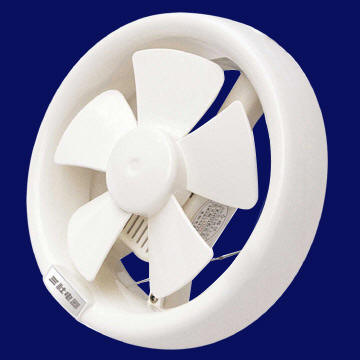
Ventilation is the process of "changing" or replacing of air in any space to remove moisture, odors, smoke, heat, dust and airborne bacteria. Ventilation includes both the exchange of air to the outside as well as circulation of air within the building. It is one of the most important factors for maintaining acceptable indoor air quality in buildings. Methods for ventilating a building may be divided into mechanical/forced and natural types. Ventilation is used to remove unpleasant smells and excessive moisture, introduce outside air, and to keep interior building air circulating, to prevent stagnation of the interior air. Mechanical or forced ventilation:"Mechanical" or "forced" ventilation is used to control indoor air quality. Excess humidity, odors, and contaminants can often be controlled via dilution or replacement with outside air. But in humid climates, much energy is required to remove excess moisture from ventilation air.Kitchens and bathrooms typically have mechanical exhaust to control odors and sometimes humidity. Factors in the design of such systems include the flow rate (which is a function of the fan speed and exhaust vent size) and noise level. If the ducting for the fans traverse unheated space (e.g., an attic), the ducting should be insulated as well to prevent condensation on the ducting. Direct drive fans are available for many applications, and can reduce maintenance needs. Heat recovery ventilation systems employ heat exchangers to recover some heat from exhausted air, to preheat the incoming outside air. Ceiling fans and table/floor fans are very effective in circulating air within a room. Counter intuitively, because hot air rises, ceiling fans may be used to keep a room warmer. Ceiling fans do not provide 'ventilation', however. Natural ventilation:Natural ventilation is the ventilation of a building with outside air without the use of a fan or other mechanical system. It can be achieved with operable windows when the spaces to ventilate are small and the architecture permits. In more complex systems warm air in the building can be allowed to rise and flow out upper openings to the outside (stack effect) thus forcing cool outside air to be drawn into the building naturally through openings in the lower areas. These systems use very little energy but care must be taken to ensure the occupants' comfort. In warm or humid months, in many climates, maintaining thermal comfort via solely natural ventilation may not be possible so conventional air conditioning systems are used as backups. Air-side economizers perform the same function as natural ventilation, but use mechanical systems' fans, ducts, dampers, and control systems to introduce and distribute cool outdoor air when appropriate.
Martin County: (772) 214-9929 Broward/Palm Beach Counties: (954) 340-6615 Email me at: ev@magnuminspections.com |
|
||
|
Copyright Magnum Inspections Inc. 1994-2018--All Rights Reserved |
|